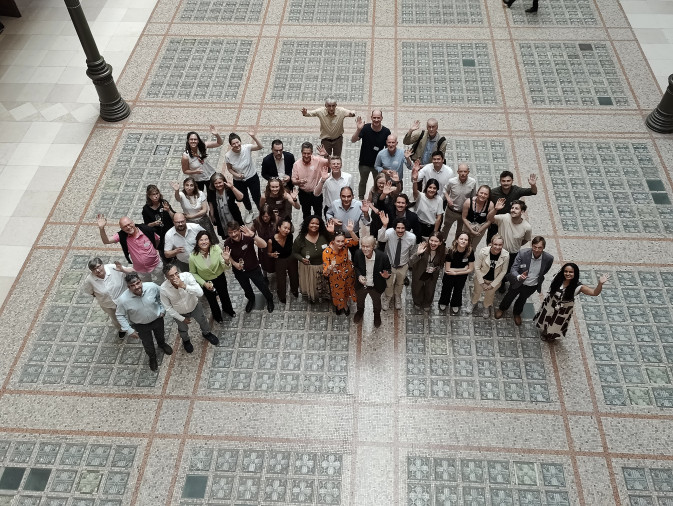
Leaders in policy, science and industry steering Europe towards climate neutrality gathered once again in Brussels for the Climate Neutrality Forum 2026, held on 28-29 May at the prestigious Art & History Museum.
Taking place ten years after the Paris Agreement, this edition of the Forum carried particular resonance. Under the overarching theme of Climate Action, Global Security and the Costs of Inaction, the two-day programme served as a vital platform for the exchange of the latest climate science and its potential to accelerate progress towards net-zero targets.
The tone throughout was purposeful, reflecting the significance of the issues on the table. Sessions struck a balance between formal presentations and open discussion, allowing conversations to continue well beyond the agenda. Policymakers and scientists engaged directly, exploring how research can support impactful action to protect society, the economy and the environment from the impacts of climate change.
The Climate Neutrality Fora (CNF) are biennial dialogue events under the Equinox Process, which aims to accelerate the transfer of knowledge from science to policy and action. They are an initiative of JPI Climate, and the past two editions have been supported by the MAGICA Project. It is a collaborative drive for effective climate action, based on ongoing work by leading experts, science assessment bodies and research funders.
The programme covered the full breadth of the climate action agenda. Day one opened with a session on the state of the climate system and pathways to keeping 1.5°C within reach, drawing on the latest findings from the Indicators of Global Climate Change initiative and the Global Carbon Project, alongside insights from Integrated Assessment Models. This was followed by a deep dive into the just and equitable energy transition — from the trajectory towards net-zero CO₂ emissions and Carbon Capture and Storage to methane reduction opportunities, including updates from UNEP’s Methane Alert and Response System. The afternoon turned to sustainable food production, addressing methane and nitrous oxide emissions from agriculture and their links to water quality, biodiversity and ozone depletion. The day closed with a panel discussion on climate action, global security and resilience, before attendees gathered for a reception dinner in the Grand Narthex of the museum.
Day two broadened the lens further. Sessions examined pathways to net-zero land use and the optimisation of land for climate, biodiversity and food security; the state of play on Carbon Dioxide Removals and the financing and governance challenges they present; and the role of short-lived climate forcers. A high-level intervention by Eamon Ryan, former Irish Minister for Climate, Environment and Energy and now Advisor to the Global Climate and Clean Air Coalition, addressed the geopolitics of energy and climate. The afternoon concluded with a forward-looking session on European and global perspectives, revisiting messages from the Equinox Workshop of February 2026 and charting options for climate action in the service of a secure global future.
A key factor in the success of CNF 2026 was the integration of policy and science across all topics addressed. Participants were able to engage directly with one another, discuss the challenges they face, and identify the knowledge and support needed to solve these challenges. Speakers included representatives from the European Commission, the European Parliament, the IPCC, the Joint Research Centre, the Global Carbon Project, FAO, IIASA, and leading universities and research institutes from across Europe and beyond.
The discussions from CNF 2026 are feeding into an Equinox report, currently in preparation, which will distil the key science-to-policy messages emerging from the forum. The report is intended to inform the UNFCCC process and will contribute directly to preparations for COP31, to be held in Türkiye.